Affiliate Disclosure: CatWorld is reader-supported. When you buy through links on this page, we may earn a small affiliate commission at no extra cost to you. Learn more.
Picture this: your cat approaches their food bowl, takes one sniff, then walks away leaving a full meal untouched. Or maybe they eat but seem uncomfortable — hunching awkwardly, stopping mid-meal, or leaving food scattered everywhere. Sound familiar?
Here’s the surprising truth most cat owners don’t know: the bowl itself could be the problem. A poorly designed cat food bowl causes whisker fatigue (yes, that’s a real medical condition), forces cats into painful neck positions, harbors dangerous bacteria, and can even contribute to chin acne. The right bowl makes mealtime comfortable, hygienic, and mess-free.
After researching dozens of options and analyzing thousands of verified reviews, we’ve identified the 5 best cat food bowls and elevated feeders of 2026 — each tackling a different problem cats face at mealtime. Whether your cat is a picky whisker-sensitive eater, a senior with arthritis, or a fast-chomping vomiter, there’s a perfect bowl here for them.
Quick Comparison: Best Cat Food Bowls 2026
| Bowl | Material | Best For | Price Range |
|---|---|---|---|
| Necoichi Extra-Wide Elevated | Ceramic | Whisker-sensitive cats | $15–$22 |
| Hepper NomNom Double Bowl | Stainless Steel | Reducing mess & spills | $22–$28 |
| Dr. Catsby’s Whisker Relief | Stainless Steel | Whisker fatigue & acne prevention | $14–$20 |
| Fukumaru Elevated Ceramic | Ceramic + Bamboo | Senior & arthritic cats | $25–$35 |
| Americat Stainless Steel | Stainless Steel | Safety-conscious owners | $18–$25 |
The 5 Best Cat Food Bowls & Elevated Feeders of 2026
1. Necoichi Ceramic Extra-Wide Elevated Cat Food Bowl — Best Overall for Whisker-Sensitive Cats
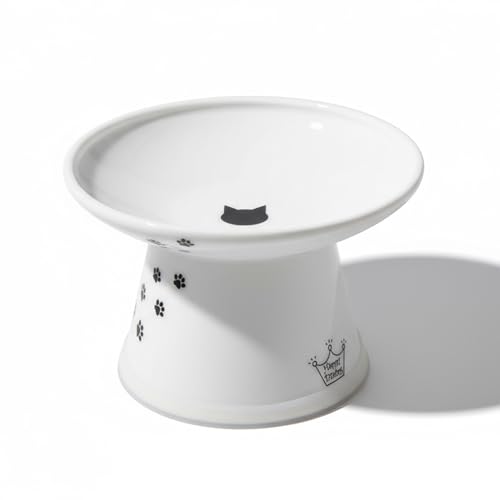
If your cat has ever pawed food out of their bowl, eaten in a strange sideways position, or simply refused to finish meals — whisker fatigue may be to blame. The Necoichi Ceramic Extra-Wide Elevated Cat Food Bowl is the gold standard solution, and it’s our top pick for 2026.
Necoichi engineered this bowl with one guiding principle: cats should never have to touch their whiskers to a bowl wall while eating. The result is an extra-wide, shallow ceramic dish with a raised base that keeps food accessible without any whisker contact. It looks elegant on any kitchen floor and functions beautifully for cats of all breeds.
The raised base is a subtle but brilliant design feature. Instead of forcing your cat to crane their neck downward — which strains the cervical spine over thousands of meals — the elevated position allows them to eat at a natural, comfortable angle. Senior cats, cats recovering from neck surgery, or any feline with mobility issues will especially appreciate this.
Ceramic is an excellent material choice here. Unlike plastic bowls — which scratch easily and harbor bacteria in micro-grooves — smooth, glazed ceramic maintains a bacteria-resistant surface meal after meal. It’s also heavy enough to stay put and dishwasher-safe for effortless cleaning.
Pros
- Extra-wide shallow design completely eliminates whisker contact
- Raised base promotes natural, comfortable eating posture
- Thick ceramic resists bacteria better than plastic
- Dishwasher-safe and microwave-safe
- Heavy enough to stay put — no sliding during feeding
- Clean, minimalist aesthetic suits modern homes
Cons
- Ceramic can chip or crack if dropped on hard floors
- Available in limited color options
- Slightly pricier than basic plastic options
Best For
Cats with whisker sensitivity, cats who leave food in bowl centers, or any owner who wants a premium, hygienic feeding experience. Also ideal for flat-faced breeds like Persians and Himalayans.
2. Hepper NomNom Cat Bowl — Best for Spill Prevention & Easy Cleanup

If your cat’s feeding area looks like a disaster zone after every meal — food scattered across the floor, water splashed onto the mat, little paw prints tracking it all through the house — the Hepper NomNom Cat Bowl is the fix you’ve been looking for.
This cleverly engineered system features two stainless steel bowls set inside a wide, raised plastic tray. The tray’s raised lip catches every dropped piece of kibble, every splash of water, and every drag-out-of-the-bowl piece of wet food. No more soggy floor mats. No more mystery wet spots on your kitchen tiles.
The two 304-grade stainless steel bowls are wide and shallow — a design choice that serves double duty. First, shallow bowls prevent whisker fatigue, the same benefit as our top pick. Second, stainless steel is the most hygienic material for cat bowls: non-porous, rust-resistant, dishwasher-safe, and free of the BPA and phthalates sometimes found in plastic.
The tray elevates both bowls slightly, reducing neck strain for most cats. It’s a practical, Amazon’s Choice-rated system that has earned its reputation through thousands of positive reviews. At $24.99, it’s an investment in your sanity as much as your cat’s health.
Pros
- Deep outer tray catches all spills, crumbs, and scattered food
- Two bowls — perfect for separating food and water
- 304-grade stainless steel is hygienic and dishwasher-safe
- Wide, shallow bowls reduce whisker contact
- Slightly elevated position promotes better posture
- Amazon’s Choice — verified quality by thousands of buyers
Cons
- The plastic tray can stain with some wet cat foods
- Two-bowl layout may not suit cats that only eat dry food
- Tray depth might be too low for very tall cats
Best For
Multi-cat homes needing separate food and water stations, messy eaters who scatter food constantly, and anyone tired of cleaning up after every single meal.
3. Dr. Catsby’s Whisker Relief Cat Food Bowl — Best Budget Stainless Steel Option

With over 2,000 verified reviews and a 4.6-star rating, the Dr. Catsby’s Whisker Relief Cat Food Bowl has earned its place as one of the most trusted cat bowls on Amazon. It’s the go-to choice for owners whose cats show classic signs of whisker fatigue: pawing food out of the bowl, approaching the bowl then backing away, or only eating from the top of a pile.
Dr. Catsby’s patented design is based on scientific understanding of feline sensory anatomy. A cat’s whiskers aren’t just decorative — they’re highly sensitive proprioceptive organs that detect changes in airflow, help with navigation, and even play a role in how cats perceive their food. When whiskers repeatedly brush against a bowl’s inner walls during eating, the resulting sensory overload becomes genuinely stressful and painful over time. This is whisker fatigue, and it’s more common than most cat owners realize.
The solution is beautifully simple: an extremely wide, shallow bowl that keeps whiskers free and clear at all times. Dr. Catsby’s uses kitchen-grade #304 stainless steel — the same food-safe alloy used in professional kitchen equipment — making it rust-proof, bacteria-resistant, and safe for cats prone to feline chin acne (a condition often worsened by plastic bowl use).
A food-grade silicone non-slip mat is included, keeping the bowl firmly in place even during enthusiastic eating sessions. The whole thing drops into the dishwasher for sanitizing. For under $20, this is exceptional value.
Pros
- Patented ultra-wide, ultra-shallow design specifically targets whisker fatigue
- Kitchen-grade #304 stainless steel — hygienic and rust-proof
- May reduce feline chin acne linked to plastic bowls
- Non-slip silicone mat included — stays in place
- Dishwasher-safe for easy cleaning
- 4.6 stars from 2,000+ verified Amazon reviews
- Budget-friendly price point
Cons
- Single bowl only — no water bowl included
- Very shallow design means some cats may push food off the edges
- Not ideal for cats who need larger food portions
Best For
Cats with confirmed whisker fatigue, cats prone to feline chin acne, and budget-conscious owners who want the health benefits of stainless steel without a premium price tag.
4. Fukumaru Elevated Ceramic Cat Bowls with Bamboo Stand — Best for Senior & Arthritic Cats

If you have a senior cat, a cat with arthritis, or a cat who regularly vomits shortly after eating, the Fukumaru Elevated Ceramic Cat Bowls with Bamboo Stand could make a meaningful difference in their quality of life.
This beautifully crafted set combines two food-grade ceramic bowls mounted on a solid natural bamboo stand with a 15° tilt. That tilt angle is the key innovation here. When cats eat from a flat bowl on the floor, they must flex their neck sharply downward, compressing their esophagus and fighting gravity to swallow. This awkward position is a common trigger for post-meal regurgitation — that frustrating situation where your cat gobbles food, then vomits it back up within minutes unchanged.
The 15° tilt naturally aligns the cat’s digestive tract during eating, allowing food to travel smoothly from the mouth to the stomach with minimal effort. Many owners of cats with chronic post-meal vomiting report significant improvement after switching to this style of elevated, tilted bowl.
For senior cats or cats with joint disease, the elevation itself reduces the neck extension required during meals. Over thousands of meals per year, this translates into less strain on aging joints and a more comfortable daily routine. The bamboo stand is durable and waterproofed, resisting moisture that would normally warp wood. Both ceramic bowls are dishwasher and microwave safe, food-grade certified, and free of lead and cadmium.
The natural aesthetic of ceramic and bamboo is also a genuine perk — this is one of the most visually appealing bowl sets on the market, suitable for display in stylish homes.
Pros
- 15° tilted design aids digestion and reduces post-meal vomiting
- Elevated stand reduces neck and joint strain for senior cats
- Beautiful natural bamboo and ceramic aesthetic
- Food-grade ceramic — dishwasher and microwave safe
- Lead-free and cadmium-free certified
- Waterproof bamboo coating prevents warping and mold
- Non-slip rubber feet for stability
Cons
- Ceramic bowls can chip if dropped
- Bamboo stand requires hand-washing to prolong lifespan
- Slightly bulkier footprint than single-bowl options
Best For
Senior cats (7+), cats with arthritis or mobility issues, cats who vomit regularly after eating, and style-conscious owners who want feeding equipment that looks as good as it functions.
5. Americat Company Stainless Steel Cat Bowl — Best for Safety-Conscious Owners

For owners who want absolute certainty about what their cat is eating from, the Americat Company Stainless Steel Cat Bowl is in a category of its own. While most stainless steel bowls are manufactured overseas with varying quality controls, Americat makes their bowls entirely in the USA — and they’ve had them independently lab-tested to confirm they’re free of lead, BPA, and all other harmful materials.
This isn’t marketing fluff. Cats who eat from plastic bowls are frequently exposed to trace amounts of BPA, phthalates, and other compounds that leach into food — especially wet food with higher fat content. Even some stainless steel bowls imported from certain regions have tested positive for trace heavy metals. The Americat bowl eliminates this concern entirely.
The design is wide-brimmed and shallow, directly addressing whisker fatigue with the same philosophy as our other top picks. The anti-skid rubber base keeps it planted firmly on any surface, from slippery tile to hardwood. The food-grade stainless steel has a non-porous, ultra-smooth surface that resists bacterial buildup and is genuinely dishwasher safe for complete sanitization.
If your cat has ever been diagnosed with feline chin acne — those small blackheads or pustules on the chin often caused by bacteria from plastic bowls — switching to this bowl (and its stainless steel stablemates) is one of the first steps vets recommend. Thousands of owners have reported their cats’ chin acne clearing up within weeks of making the switch.
Pros
- 100% USA-made — independently lab-tested for lead and contaminants
- Food-grade stainless steel — completely BPA-free and non-toxic
- Wide shallow brim prevents whisker fatigue
- Anti-skid rubber base prevents sliding on all floor types
- Non-porous surface resists bacteria — ideal for cats with chin acne
- Dishwasher-safe for complete sanitization
- Durable — will last the lifetime of your cat
Cons
- Higher price than imported stainless steel options
- No elevation — sits flat on the floor
- Simple design offers no frills or extras
Best For
Safety-conscious owners, cats with feline chin acne, cats with food sensitivities or immune issues, and anyone who wants the peace of mind of USA-made, independently tested materials.
Cat Food Bowl Buying Guide: Everything You Need to Know
The #1 Problem Most Cat Owners Don’t Know About: Whisker Fatigue
Whisker fatigue is one of the most misunderstood issues in cat care. A cat’s whiskers — formally called vibrissae — are deeply embedded in follicles rich with nerve endings and blood vessels. They’re not just hairs; they’re highly sensitive sensory organs that help cats navigate, communicate, and process information about their environment.
When a cat eats from a deep, narrow bowl, their whiskers repeatedly press against the bowl’s inner walls with every bite. This constant sensory bombardment triggers stress signals in the nervous system. Over time, the cat associates mealtime with discomfort and begins to display symptoms: pawing food out of the bowl, eating only from the center or top of the food pile, approaching the bowl then backing away, or refusing to eat entirely.
The fix is simple: choose a wide, shallow bowl where whiskers can extend freely without touching the sides. All five bowls on our list address this in some way, making this a great starting point for any cat food bowl purchase.
Material Matters: Stainless Steel vs. Ceramic vs. Plastic
Stainless Steel (Best Hygienic Choice)
304-grade stainless steel is the gold standard for cat bowls. It’s non-porous (bacteria can’t penetrate the surface), rust-proof, dishwasher-safe, and free of the chemicals found in plastic. Stainless steel doesn’t scratch easily, so it won’t develop the micro-grooves that harbor bacteria over time. It’s also the material most commonly recommended by veterinary dermatologists for cats with feline chin acne.
Ceramic (Best Aesthetic Choice)
High-quality glazed ceramic is an excellent alternative to stainless steel. The smooth glaze creates a bacteria-resistant surface, and ceramic is generally heavy enough to stay put without a separate anti-slip base. Ceramic bowls are dishwasher-safe and come in a wide range of beautiful designs. The downsides: ceramic can chip or crack if dropped, and lower-quality ceramics may contain trace lead or cadmium in the glaze. Always look for ceramics certified as food-grade and lead-free.
Plastic (Avoid When Possible)
Plastic bowls are the most commonly used but also the most problematic. Plastic scratches easily, creating micro-grooves that harbor bacteria even after washing. Many plastics contain BPA or phthalates that can leach into food. Plastic is also the primary culprit behind feline chin acne, a condition affecting a significant percentage of cats who eat from plastic bowls. If budget is the only constraint, food-grade BPA-free plastic is acceptable, but switching to stainless steel or ceramic is always recommended.
Should You Choose an Elevated Bowl?
Elevated bowls were once universally recommended by vets, but the science here is nuanced. Here’s the current understanding:
Who benefits from elevated bowls:
- Senior cats (7+) with neck, shoulder, or joint pain
- Cats with arthritis or mobility limitations
- Large or tall cats who must crouch significantly to eat
- Cats with megaesophagus (a condition requiring upright eating)
- Cats who regularly vomit soon after eating due to esophageal positioning
Healthy adult cats: For most healthy adult cats, a modest elevation (2-4 inches) doesn’t hurt and may offer mild comfort benefits, but it’s not medically essential. The priority for healthy cats is bowl width, material, and shallowness over elevation height.
Tilted Bowls: A Step Beyond Elevated
Tilted bowls, like the Fukumaru (15° tilt), take the elevation concept further. The tilt aligns the digestive tract during eating, reducing the effort required to swallow and helping food move smoothly into the stomach. This is particularly beneficial for cats prone to post-meal regurgitation — a frustrating but often easily solvable problem with the right bowl geometry.
Size Guide: Choosing the Right Bowl Diameter
- Kitten to small cat (under 7 lbs): 4–5 inch diameter
- Average adult cat (7–12 lbs): 5–6 inch diameter
- Large cat (12+ lbs): 6–7 inch diameter or wider
- Flat-faced breeds (Persians, Himalayans): Always go extra-wide and extra-shallow to accommodate their facial structure
How Often Should You Wash Cat Food Bowls?
Veterinarians recommend washing cat food bowls after every single meal — especially wet food bowls, which develop bacterial biofilm within hours at room temperature. Dry food bowls should be washed at minimum once daily. Stainless steel and ceramic bowls can be sanitized in the dishwasher; plastic bowls should be replaced every 6–12 months as scratches accumulate.
The Feline Chin Acne Connection
Feline chin acne (comedones or pustules on the chin) affects cats of all ages and breeds. The condition is caused by overproduction of sebum at the hair follicles, which can be triggered or worsened by contact with contaminated surfaces — particularly plastic bowls with microscopic scratches harboring bacteria and fungi. Switching to stainless steel or ceramic bowls is often the first intervention vets recommend, and many owners report dramatic improvement within 2–4 weeks of making the change.
Frequently Asked Questions
Why does my cat paw food out of the bowl before eating it?
This is one of the most common signs of whisker fatigue. When the bowl is too deep or narrow, your cat’s whiskers touch the sides during eating — which is uncomfortable for these sensitive sensory organs. The solution is a wide, shallow bowl like the Necoichi Extra-Wide or Dr. Catsby’s Whisker Relief, both designed specifically to address this problem. Some cats also paw food out due to instinctive food-caching behavior, but if it only happens with certain bowls, whisker fatigue is the most likely cause.
Are elevated cat food bowls actually better?
For senior cats, cats with arthritis, and cats who vomit frequently after eating, yes — elevated bowls offer real benefits by reducing neck strain and improving esophageal alignment during swallowing. For young, healthy adult cats, elevation is a nice-to-have rather than a necessity. The most important factors for any cat are bowl width (wide prevents whisker fatigue), material (stainless steel or ceramic for hygiene), and ease of cleaning.
How do I know if my cat has whisker fatigue?
Signs include: pacing around the food bowl without eating, pawing food out before eating it, only eating from the center of the bowl, leaving food at the edges, approaching the bowl then backing away, or seeming stressed at mealtime. If your cat eats fine from a flat plate but not from a bowl, that’s a strong indicator. Switching to a wide, shallow bowl typically resolves the issue within days.
Can the wrong cat food bowl cause feline chin acne?
Yes — this is well-documented. Plastic bowls are the primary culprit. Plastic scratches easily over time, creating micro-grooves that harbor Malassezia and other microorganisms. When your cat’s chin contacts these contaminated surfaces thousands of times per year, it can trigger the skin reaction that causes feline chin acne. Switching to stainless steel or high-quality ceramic bowls — and washing them daily — often clears up chin acne within a few weeks.
What’s the difference between a food bowl and a water bowl for cats?
While cats can technically use the same type of bowl for both food and water, separate bowls placed in different locations tend to encourage better hydration. Cats in the wild evolved to find water away from their kill, so instinctively many cats prefer water stations away from their food. Stainless steel and ceramic are good materials for both. For water specifically, many cats prefer running water — which is why a separate cat water fountain is worth considering alongside your food bowl upgrade.
How often should I replace cat food bowls?
Stainless steel and ceramic bowls can last the lifetime of your cat if maintained properly — years or even decades. Replace them only if they become scratched, chipped, or cracked (which creates bacterial hiding spots). Plastic bowls should be replaced every 6–12 months as micro-scratches accumulate. Any bowl showing visible scratches, deep grooves, or persistent discoloration should be replaced immediately regardless of material.
Is it safe to use human dishes for cats?
Technically yes, provided the dish is food-grade, lead-free, and the right size. Many owners successfully use shallow human dessert plates or small salad plates — and many cats prefer them precisely because they eliminate whisker contact. The practical issue is stability (they slide easily without a non-slip base) and the fact that they aren’t designed with cat-specific dimensions in mind. A purpose-built cat bowl from our list will generally serve your cat better.
Conclusion: The Best Cat Food Bowl for Your Cat
After all this research, one thing is clear: the bowl you feed your cat from matters more than most owners realize. The right bowl can resolve whisker fatigue, reduce post-meal vomiting, prevent chin acne, and make mealtime a genuine pleasure rather than a source of stress.
Here are our final recommendations by need:
- Best Overall: Necoichi Ceramic Extra-Wide Elevated Cat Food Bowl — the widest, most whisker-friendly design with elegant ceramic construction
- Best for Mess Control: Hepper NomNom Cat Bowl — the spill-catching tray system makes cleanup effortless
- Best Budget Pick: Dr. Catsby’s Whisker Relief Bowl — 4.6 stars, 2,000+ reviews, under $20
- Best for Senior Cats: Fukumaru Elevated Ceramic Bowls — 15° tilt aids digestion and reduces joint strain
- Best for Safety: Americat Stainless Steel Bowl — USA-made, independently lab-tested, completely contaminant-free
Every cat is different, and the “best” bowl depends on your cat’s specific needs and habits. But any of these five options will represent a significant upgrade over a basic plastic bowl — and your cat will thank you for it at every meal.
Last updated: August 2026. Product availability and prices may vary. Always verify current pricing on Amazon before purchasing.