
Affiliate Disclosure: CatWorld is reader-supported. When you buy through links on this page, we may earn a small affiliate commission at no extra cost to you. Learn more.
You brought home a tiny furball. Now comes the most important decision you’ll make in your kitten’s first year of life: what to feed them. Get this right, and you’re setting up your cat for a lifetime of strong bones, sharp eyes, a healthy immune system, and vibrant energy. Get it wrong, and the consequences — stunted growth, nutritional deficiencies, digestive problems — can follow them for years.
The problem? Walk into any pet store and you’ll be confronted with dozens of bags, cans, and pouches all claiming to be “complete and balanced” for kittens. Some genuinely deliver. Others are glorified filler dressed up in cute packaging. And almost none of them explain why a kitten’s nutritional needs are so dramatically different from an adult cat’s.
Here’s the thing: kittens aren’t just small cats. From birth to around 12 months old, they’re growing at a rate that demands significantly more protein, fat, calories, and specific nutrients — like DHA for brain and vision development, and calcium-to-phosphorus ratios calibrated for bone growth — than any adult cat food can provide. Feed your kitten adult cat food and you risk real developmental harm.
That’s why we spent hours researching, cross-referencing veterinary nutrition guidelines, and analyzing ingredient panels to bring you this definitive guide to the best kitten food in 2026. Whether you’re looking for a trusted mainstream brand, a grain-free option, or a specialized formula for sensitive kittens, we’ve got you covered.
Quick Comparison: Best Kitten Foods 2026
| Product | Best For | Key Feature | Rating |
|---|---|---|---|
| Royal Canin Kitten | Overall best pick | Vet-formulated, easy-to-chew kibble | 5/5 |
| IAMS Proactive Health Kitten | Budget-friendly value | Real chicken #1, DHA, prebiotics | 4.5/5 |
| Hill’s Science Diet No Corn/Wheat/Soy | Sensitive kittens | Grain-free friendly, vet-trusted | 4.5/5 |
| Purina Pro Plan LiveClear Kitten | Allergy-prone households | Reduces cat allergens by up to 47% | 4.5/5 |
| Purina Pro Plan Complete Essentials | High-protein nutrition | Shredded blend, live probiotics | 4.5/5 |
Why Kitten Food Is NOT Optional
Before we dive into reviews, let’s be crystal clear about why kitten-specific food matters so much.
The Association of American Feed Control Officials (AAFCO) sets minimum nutritional standards for cat food, and kitten formulas must meet a significantly higher bar than adult maintenance formulas. Specifically:
- Protein: Kittens need at least 30% protein on a dry matter basis (vs. 26% for adults)
- Fat: At least 9% fat (vs. 9% for adults — similar, but kittens burn through it faster due to rapid growth)
- DHA (omega-3): Critical for brain and eye development — present in kitten formulas, often minimal or absent in adult food
- Calcium and phosphorus: Higher levels, but balanced precisely to support skeletal development without over-supplementation
- Calories: Kittens need about 2x the calories per pound of body weight compared to adult cats
The bottom line: adult cat food simply cannot deliver what a growing kitten needs. Always check the AAFCO statement on the label — it should say “formulated to meet the nutritional levels established by AAFCO Cat Food Nutrient Profiles for growth” or “for all life stages.”
Detailed Reviews: Best Kitten Food 2026
1. Royal Canin Feline Health Nutrition Kitten Dry Cat Food — Best Overall

When veterinarians around the world want to recommend a kitten food without hesitation, Royal Canin Kitten comes up more often than any other brand. This isn’t marketing spin — it’s the result of decades of nutritional science specifically tailored to the developmental biology of cats under 12 months old.
Royal Canin’s approach is meticulous. The kibble size, shape, and texture are all engineered to accommodate a kitten’s small mouth and emerging teeth, making it genuinely easier for young cats to pick up and chew compared to adult-sized kibble. That matters more than most people realize — kittens who struggle with oversized kibble may under-eat or develop poor eating habits.
The formula delivers an immune-boosting blend of antioxidants including vitamins E and C, prebiotics and highly digestible proteins to support gut microbiome balance, and omega-3 fatty acids (DHA) to nourish brain development and healthy vision. Calcium and phosphorus levels are carefully calibrated to support bone density without excess mineralization.
Ingredient quality is solid. Chicken by-product meal is the primary protein source — and while “by-product” gets a bad reputation, in Royal Canin’s case it represents organ meats that are nutritionally rich in essential amino acids like taurine, which is critical for feline heart and eye health. Every batch is formulated to meet the precise macronutrient ratios Royal Canin’s own research institute has identified as optimal for kitten development.
Best for: New kitten owners who want a vet-trusted formula without second-guessing. Ideal for kittens aged 4 weeks to 12 months.
Pros:
- Consistently recommended by veterinarians worldwide
- Kibble size and texture engineered for small mouths
- Precise immune system and digestive support
- Excellent palatability — picky kittens often take to it quickly
- Available in large bag sizes for multi-cat households
Cons:
- Higher price point than grocery store brands
- Contains chicken by-product meal (a dealbreaker for some owners)
- Not grain-free if that’s a priority for you
Price range: $30–$60 depending on bag size
2. IAMS Proactive Health Healthy Kitten Dry Cat Food — Best Value
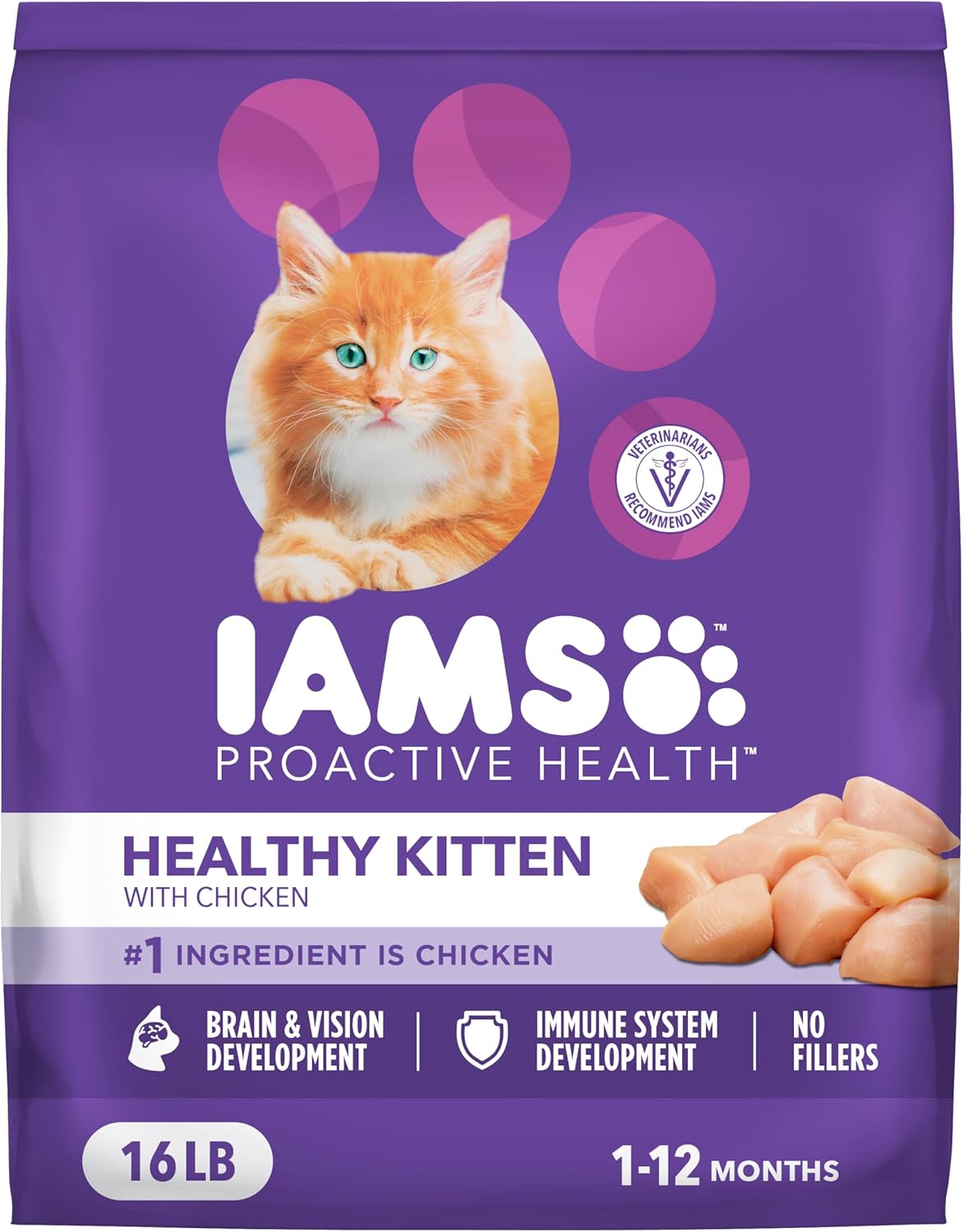
Not every kitten owner has an unlimited budget. If you’re feeding multiple kittens, fostering a litter, or simply need a reliable everyday food without premium pricing, IAMS Proactive Health Kitten is the best value pick you’ll find that doesn’t compromise on the fundamentals.
Real chicken is the number one ingredient — not a by-product, not a meal, but actual chicken meat. This positions IAMS well above grocery store generic brands and makes it a genuinely solid protein source for growing muscles. The formula includes DHA sourced from fish oil, delivering the omega-3 fatty acids essential for cognitive development and healthy vision during those critical first months.
IAMS also incorporates a proprietary prebiotic blend — fructooligosaccharides (FOS) — designed to promote a healthy balance of gut bacteria, which translates to better stool quality and improved immune function. Veterinarians frequently cite IAMS as a trustworthy, scientifically-backed choice for kitten development, and the brand is a perennial recommendation by the American Veterinary Medical Association (AVMA).
The 16 lb bag offers exceptional cost-per-pound value. If you have a litter of kittens to feed through their first year, this becomes an especially compelling choice. The kibble is appropriately sized for young cats, though slightly larger than Royal Canin’s kitten-specific pieces.
Best for: Budget-conscious owners, foster families, multi-kitten households, or anyone who needs a reliable mainstream formula with genuine nutritional credentials.
Pros:
- Real chicken as the primary ingredient
- Veterinarian-recommended formula
- Excellent cost-per-pound value at 16 lb
- DHA for brain and vision support
- Prebiotic fiber for digestive health
- Wide availability (grocery stores, pet stores, online)
Cons:
- Kibble may be slightly large for very young kittens (under 8 weeks)
- Contains corn — not ideal for corn-sensitive kittens
- Less specialized than premium vet diet options
Price range: $20–$40 depending on bag size
3. Hill’s Science Diet Kitten Formula No Corn, Wheat or Soy — Best for Sensitive Kittens

Hill’s Science Diet is one of the most trusted names in veterinary nutrition, and this particular formula represents a smart middle ground: the rigorous science and quality control that makes Hill’s the #1 vet-recommended brand, combined with an ingredient profile that removes the three most common plant-based allergen triggers in feline diets.
No corn, no wheat, no soy. For kittens who show signs of food sensitivities — loose stool, excessive gas, skin itching, or vomiting — eliminating these common irritants can make a dramatic difference without resorting to prescription-only elimination diets. This formula is often the first thing veterinary nutritionists recommend before moving to more expensive therapeutic diets.
The formula leads with chicken as the primary protein, providing the complete amino acid profile that kittens need for rapid muscle development. It delivers antioxidant vitamins E and C to support immune function during the critical period when maternal antibodies are waning and the kitten’s own immune system is developing. Calcium and phosphorus are precisely balanced to support skeletal growth without over-supplementation.
Hill’s manufacturing standards are exceptionally high — every batch is tested before and after production, and the brand has a long track record of nutritional consistency. For kittens with digestive sensitivities, that consistency alone is worth the price premium.
Best for: Kittens with sensitive stomachs, food sensitivities, or those showing signs of digestive upset on standard formulas. Also ideal for owners who prefer to avoid corn, wheat, and soy as a precaution.
Pros:
- #1 veterinarian recommended brand in the US
- No corn, wheat, or soy — good for sensitive systems
- Real chicken as primary protein
- Rigorous quality control and consistent formulation
- Antioxidant blend for immune support
- Calcium and phosphorus balanced for skeletal development
Cons:
- Higher price point than mainstream brands
- Not fully grain-free (contains other grains)
- Some kittens may need time to transition
Price range: $35–$65 depending on bag size
4. Purina Pro Plan LiveClear Dry Kitten Food — Best for Allergy-Prone Households

Here’s a product that does something no other kitten food on this list — or really any other kitten food — can claim: it actively reduces the primary cat allergen (Fel d 1) found in your kitten’s saliva and dander. This is genuine, peer-reviewed science, not marketing language.
Purina’s LiveClear technology is based on a discovery that a specific egg product — egg IgY antibodies — when added to cat food, neutralizes Fel d 1 in the cat’s saliva before it can be spread to fur during grooming and eventually into the air. Clinical studies have shown that feeding LiveClear reduces the active level of Fel d 1 in cat hair and dander by an average of 47% starting in the third week of feeding.
For households where someone is mildly allergic to cats but doesn’t want to give up their kitten, this is a potentially life-changing product. It doesn’t eliminate allergies, but reducing the allergen load by nearly half can make the difference between a sniffly, itchy experience and a fully comfortable one.
Beyond the allergen-reduction technology, LiveClear is a solid kitten food in its own right. Chicken is the primary ingredient, and the formula meets AAFCO nutritional requirements for growth. It includes essential nutrients for kitten development and maintains Purina Pro Plan’s reputation for palatability — notoriously picky kittens often do very well on this formula.
Best for: Households where at least one person has cat allergies, or as a proactive choice for families who want to minimize allergen exposure from day one. Also great as a general high-quality kitten food.
Pros:
- Clinically proven to reduce Fel d 1 allergen by up to 47%
- Real chicken as primary ingredient
- Meets AAFCO growth standards
- Excellent palatability for picky kittens
- Produced in Purina-owned US facilities
- Smaller bag size ideal for trial or multi-cat variety households
Cons:
- Higher cost per pound in the smaller 3.2 lb bag
- Allergen reduction takes 2–3 weeks to fully kick in
- Does not eliminate cat allergies — only reduces allergen levels
Price range: $15–$30 for the 3.2 lb bag
5. Purina Pro Plan Complete Essentials Kitten — Best Shredded Blend

What sets Purina Pro Plan Complete Essentials Kitten apart from virtually every other dry kitten food is its unique texture approach: the “Shredded Blend” combines crunchy kibble pieces with actual shredded, meaty components that mimic the texture variety a kitten would encounter in a more natural diet. The result? A formula that’s intensely palatable, even for notoriously finicky young cats who turn their noses up at standard kibble.
Chicken is the #1 ingredient, providing the high-quality animal protein that kittens need to develop lean muscle mass at their rapid growth rate. The formula is fortified with guaranteed live probiotics specifically selected to support digestive health and immune function — not just general probiotics, but strains validated to survive the manufacturing process and remain biologically active in your kitten’s gut.
DHA from omega-3 fatty acids supports brain and vision development during the critical first year. Omega-6 fatty acids and vitamin A support healthy skin and a glossy coat. The calcium-to-phosphorus ratio is calibrated specifically for kitten skeletal development.
The 6 lb bag hits a sweet spot for most single-kitten households — large enough to offer good value, small enough that you’re not worrying about freshness over many months. Pro Plan is manufactured in Purina’s own US-based facilities, which maintains higher quality control than outsourced manufacturing.
Best for: Picky kittens who reject standard kibble, or owners who want to offer texture variety in a single food. Also ideal for kittens who need probiotic support for digestive health.
Pros:
- Unique shredded blend texture for maximum palatability
- Real chicken as primary ingredient
- Guaranteed live probiotics for gut and immune health
- DHA for brain and vision development
- Omega-6 fatty acids for healthy skin and coat
- Made in Purina-owned US facilities
Cons:
- Shredded pieces can crumble and create more mess than standard kibble
- Not grain-free
- Some kittens may selectively eat the shredded pieces and leave the kibble
Price range: $18–$35 for the 6 lb bag
The Complete Kitten Food Buying Guide
1. Look for the AAFCO Statement
This is non-negotiable. Every kitten food you consider should display an AAFCO nutritional adequacy statement on the label. It should say that the food is “formulated to meet the nutritional levels established by AAFCO Cat Food Nutrient Profiles for growth” or “for all life stages.” If the food only says “for maintenance” or doesn’t carry an AAFCO statement at all, walk away.
2. Protein: Quality Matters More Than Quantity
Look for a named animal protein — chicken, turkey, salmon, beef — as the first ingredient. “Meat meal” or “poultry by-product meal” isn’t necessarily inferior; these are concentrated protein sources, and brands like Royal Canin use them intentionally. But be cautious of vague terms like “animal protein” or “meat meal” without species identification, which can indicate inconsistent sourcing.
The protein percentage on the label (minimum 30% on a dry matter basis for kittens) is important, but the amino acid profile matters more. Make sure the food contains adequate taurine, arginine, and methionine — all essential amino acids that cats cannot synthesize on their own.
3. Fat: Don’t Fear It for Kittens
Kittens have high caloric demands and efficiently utilize dietary fat. A healthy kitten food will typically have 12–20% fat on a dry matter basis. This supports energy needs, fat-soluble vitamin absorption, and healthy skin and coat development. Don’t choose a “low fat” kitten food — that’s appropriate for adult cats managing their weight, not for growing kittens.
4. DHA: The Brain Development Non-Negotiable
Docosahexaenoic acid (DHA) is an omega-3 fatty acid that is essential for brain and retinal development in kittens. Look for it listed in the guaranteed analysis or ingredients (often as “fish oil” or “DHA”). Studies consistently show that kittens fed DHA-supplemented diets score higher on cognitive and visual acuity tests compared to those fed standard formulas. This is one area where kitten formulas genuinely earn their premium over adult food.
5. Dry vs. Wet Kitten Food: The Great Debate
Both can provide complete nutrition if properly formulated. Wet food offers significantly higher moisture content (75–80% vs. 8–10% in dry food), which is valuable for hydration — cats have a naturally low thirst drive, and a well-hydrated kitten is less prone to urinary issues later in life. Dry food offers convenience, longer shelf life, and often better dental benefits from kibble texture.
Our recommendation for kittens: if possible, offer both. A dry food as the base with occasional wet food meals (or a wet food topper) gives you the best of both worlds — convenience, nutritional completeness, and moisture support. If you’re feeding only dry food, make sure fresh water is always available in multiple locations.
6. How Much to Feed Your Kitten
Use the feeding guidelines on your chosen food as a starting point, but monitor your kitten’s body condition rather than strictly adhering to charts. A healthy kitten should be slightly lean — you should be able to feel ribs without pressing, with a visible waist when viewed from above. Free-feeding (leaving food out all day) is generally fine for kittens under 6 months since they’re growing rapidly, but shift to scheduled meals (2–3 times per day) after 6 months to establish portion control habits.
Kittens typically need food specifically formulated for growth until 12 months of age. Some large breed cats (like Maine Coons) can benefit from kitten food until 18 months due to their extended growth period.
7. Transitioning Between Foods
If you’re switching from one kitten food to another, or transitioning a kitten from the food they received at a shelter or breeder, do it gradually over 7–10 days. Start with 75% old food / 25% new, gradually shifting the ratio each day. Abrupt food changes are a leading cause of digestive upset in kittens.
Frequently Asked Questions
Q: When should I switch my kitten to adult cat food?
Most cats should transition to adult food at 12 months of age. Large breed cats — Maine Coons, Norwegian Forest Cats, Ragdolls — can continue on kitten food until 18 months. Spayed and neutered cats may be able to transition earlier (around 9–10 months) since their caloric needs decrease after the procedure. Consult your vet for personalized guidance, especially if your kitten is unusually large or small for their age.
Q: Can kittens eat food labeled “for all life stages”?
Yes — “all life stages” means the food meets AAFCO nutritional requirements for both growth (kittens) and maintenance (adults). It’s a valid option for kittens. However, check that the AAFCO statement specifically includes “growth” or “all life stages including growth of kittens.” Some “all life stages” foods may not fully meet kitten-specific DHA requirements, so kitten-specific formulas remain the gold standard for the first year.
Q: Is grain-free food better for kittens?
Not necessarily. The grain-free trend in pet food has become controversial — the FDA investigated a potential link between certain grain-free diets and dilated cardiomyopathy (DCM) in cats, though causality hasn’t been definitively established. More importantly for kittens: what matters is the overall nutritional profile, not whether grains are present. Whole grains like brown rice and oats are digestible energy sources that most cats tolerate well. Unless your kitten has a confirmed grain sensitivity, there’s no compelling nutritional reason to choose grain-free.
Q: How often should I feed my kitten?
Kittens under 6 months typically do well with free-choice feeding (dry food available at all times) because they have high caloric needs and small stomachs. From 6–12 months, most nutritionists recommend 3 scheduled meals per day, transitioning to 2 meals per day as they approach adulthood. Wet food meals should always be offered fresh and removed within 30–60 minutes if uneaten to prevent bacterial growth.
Q: My kitten refuses to eat their new food. What should I do?
This is common and usually solvable. First, ensure the food is fresh and stored properly (sealed bag or container, away from heat and moisture). Try warming wet food slightly to release aroma — scent is a major driver of feline appetite. Mix a small amount of a highly palatable food (like a little tuna in water, no salt) with the new food to entice eating. If refusal continues beyond 48 hours, consult your vet — in kittens, extended food refusal can quickly lead to hypoglycemia and requires prompt attention.
Q: Can I mix wet and dry kitten food?
Absolutely — and most veterinary nutritionists encourage it. Mixing wet and dry food provides texture variety, increases overall moisture intake, and often improves palatability for picky eaters. Just ensure that the total caloric intake from both foods combined is appropriate for your kitten’s age and weight. Don’t simply top up dry food with wet food without adjusting portions — kitten obesity, while less common than adult obesity, can still occur with chronic overfeeding.
Q: Are raw diets safe for kittens?
Raw diets are controversial and carry real risks for kittens specifically. Young cats have developing immune systems that are more vulnerable to pathogens like Salmonella, Listeria, and E. coli commonly found in raw meat. The AVMA, AAFCO, and most veterinary organizations recommend against raw diets for kittens, elderly cats, and immunocompromised animals. If you’re interested in a more “natural” diet, freeze-dried raw options that have been pathogen-tested offer a safer compromise.
Conclusion: Which Kitten Food Should You Choose?
After thorough analysis, here’s our definitive breakdown for 2026:
- Best overall: Royal Canin Kitten — the gold standard that veterinarians trust above all others. If you want one food that handles everything from immune development to kibble ergonomics for young mouths, this is it.
- Best value: IAMS Proactive Health Kitten — real chicken, DHA, prebiotics, and a price tag that doesn’t require a second mortgage. Exceptional for multi-kitten households.
- Best for sensitive kittens: Hill’s Science Diet No Corn/Wheat/Soy — the vet-trusted formula that removes the most common dietary irritants without sacrificing nutrition.
- Best for allergy households: Purina Pro Plan LiveClear — clinically proven to reduce the cat allergen that affects millions of people. A genuine innovation in kitten nutrition.
- Best for picky eaters: Purina Pro Plan Complete Essentials — the shredded blend texture that converts even the most stubborn kibble-rejectors.
The most important thing? Choose a food with an AAFCO growth statement, keep fresh water available at all times, schedule your kitten’s first wellness visit to discuss nutrition with your vet, and enjoy these fleeting months of kittenhood. They grow up faster than you think.
This article is for informational purposes only and is not a substitute for professional veterinary nutritional advice. Always consult your veterinarian before making significant changes to your kitten’s diet.